Why AI Intake Personal Injury Law Firm System Needs Upgrades?
Even if your AI intake system for personal injury law firms is still answering calls and messages, it can become outdated. The true test is whether the legal intake process reliably and consistently takes an inquiry from initial contact to a good level of qualification, follow-up, and next steps.
Personal injury firms are typically willing to spend a lot of money in order to create demand. More inquiries are not the solution to an intake process that fails to pick up calls, fails to follow up, fails to gather complete information, or fails to create a good handoff.
Firms should first look at the effectiveness of their current pipeline in converting attention to qualified opportunities before spending more on acquisition. PipelineLift AI's legal intake guide offers more context about the steps in between the initial inquiry and conversion.
AI for Personal Injury Lawyers Requires Better Legal Intake Discipline
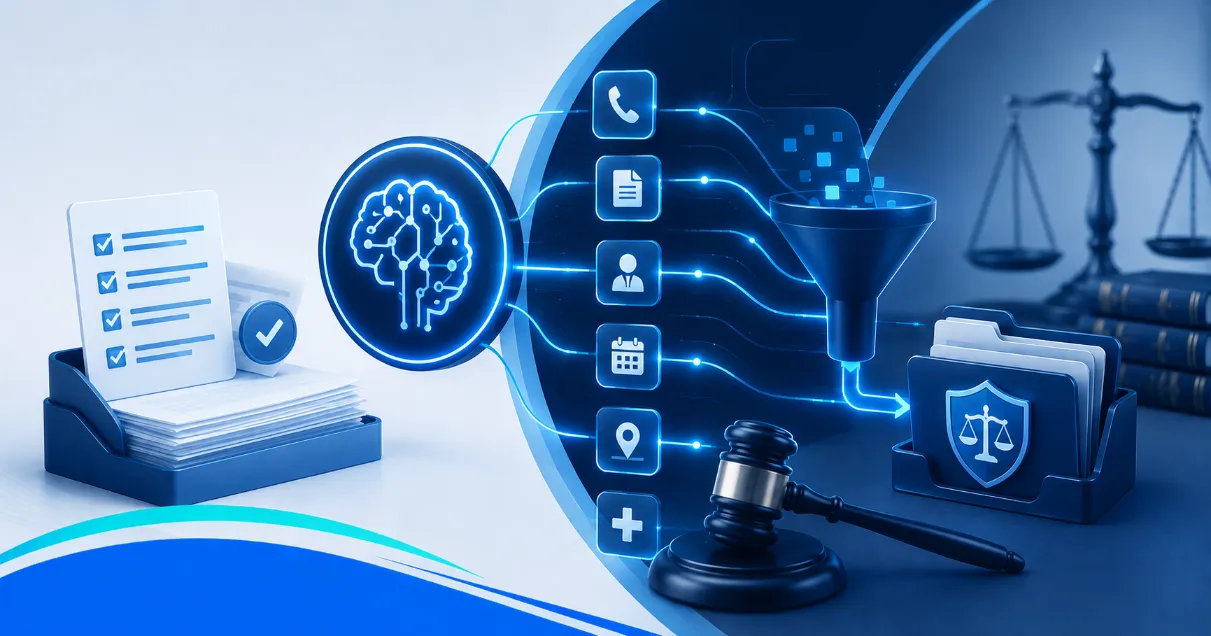
Many conversations about the use of AI for personal injury attorneys revolve around medical records, drafting, discovery, and more after the case is brought in. It is important to give client intake the same consideration, as not getting the information right at the start can lead to problems in the operation.
The American Bar Association's 2026 guidance for plaintiff firms suggests considering the following: Does the technology fit the firm's workflow? How are errors monitored? How does the system facilitate the work done?
In the case of legal intake, it isn't just about whether or not an AI tool can converse.
A firm should consider if it can support:
Instant interaction on the appropriate channels.
Firm-approved qualification questions.
Missed-call recovery.
Consistent follow-up.
Clear routing rules.
Appropriate human escalation.
Organized information for the next person who will be involved with the inquiry.
If the client intake system isn't able to reliably do those steps, it may require more than a script update.
An AI Personal Injury Lawyer System Must Match Your Intake Rules
It's important to remember that an AI personal injury lawyer tool should not replace professional judgment. The better operating model is to assign technology specific tasks and leave legal judgment, representation decision-making, and situations that require human intervention to the attorneys and staff.
“Before any PI firm upgrades its intake stack, I want to see how the vendor handles hand-off and escalation in writing, not just in a demo. The contract terms around data handling and human oversight matter as much as the technology itself.”
Brian Heller, JD, Boston University; MBA, University of Michigan — 20+ years in corporate law and business development; led $1B+ in annual deal negotiations
The current legal intake guidance also makes the difference between legal intake automation and legal advice. NightAI's July 2026 guide defines intake as "the process of collecting valuable data, setting next steps, and transferring matters without the firm's judgment or acceptance.
When it comes to configuration, it should be in alignment with the firm's own intake criteria for a personal injury practice. Questions might include the incident type, when and where it occurred, jurisdiction, injuries, treatment, whether represented, and other information the firm deems pertinent.
The goal isn't to have AI determine if somebody has a legitimate claim. It's to gather the data that the firm's individuals require and to advance pertinent inquiries in a steady way.
AI Legal Intake Must Connect Response With Qualification and Follow-Up
Effective AI legal intake is more than just answering the initial contact. A modern intake process should tie in response, qualification, communication, follow-up, and handoff.
The difference is important for companies to consider when assessing if it is time to upgrade their technology. A system might seem to be working because there are people answering calls or automatic messages are sent to Web queries. However, if there is no consistent follow-up with the prospect, inconsistent qualification, or collected data doesn't reach the proper individual, there is a gap in the process.
PipelineLift AI takes a different tack at this issue as intake and conversion infrastructure. It can be configured to have AI voice agents, SMS, email, web chat, intelligent qualification, persistent follow-up, missed-call recovery, intake automation, and workflow integrations.
Companies considering these functions can look at PipelineLift AI's intake and follow-up services and understand how various intake channels can be unified under one process.
An AI Intake Specialist specifically for injury law needs, tailored to your practice.
An AI Intake Specialist for Injury Law Needs Practice-Specific Configuration
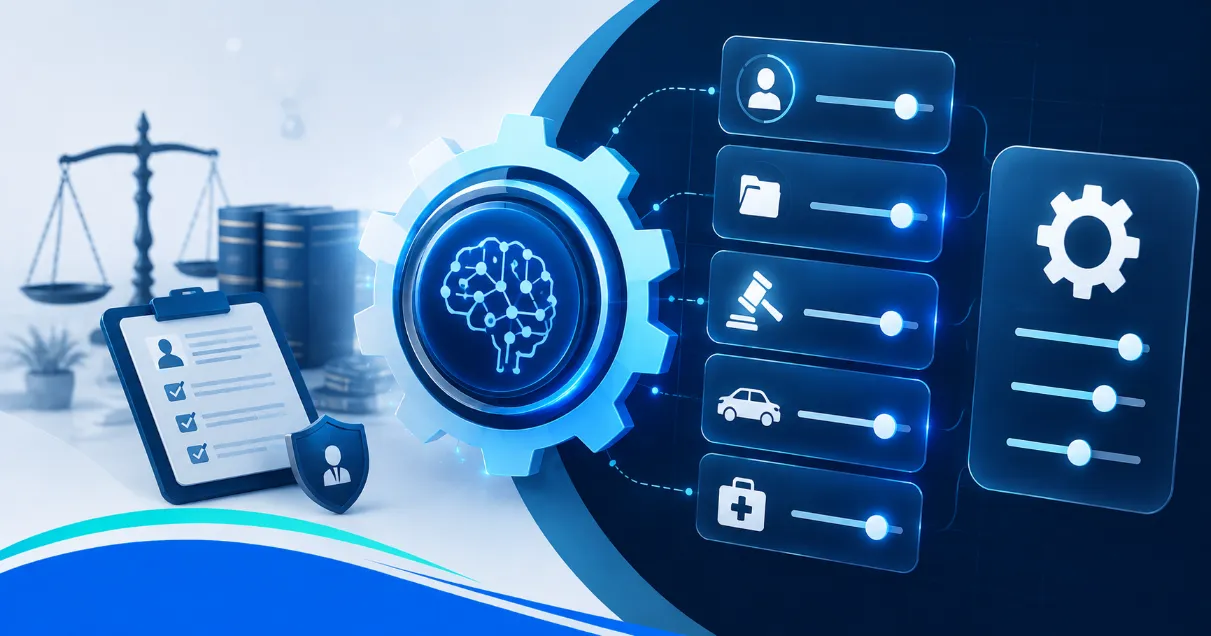
There are two problems that can be caused by generic question sequences. Asking too little leaves the team without sufficient information to determine next steps. Don't ask too much; otherwise, it may become an unnecessary interrogation.
Today, more providers of PI intake are focusing on practice-specific questioning, rather than generic contact capture. For instance, ClaimVox's PI intake materials target specific questions to fit the case type and prevent further questions if the firm has all the information needed for its next decision.
A helpful upgrade review thus ought to take a look at the rationale behind the discussion. Firms can query if the system adapts questions to answers, if it knows when to hand over to a human, and if it documents the information in a way that fits in with the current workflow.
The technology must be a fit for the firm's process and not dictate the firm's intake template.
AI in Injury Firms' Litigation Process Depends on Reliable Intake Data
The effectiveness of AI in injury firms is reliant upon the quality of the data that they input into the system.
Injury firms frequently start discussions about the litigation process with document review, medical chronologies, deposition summaries, or drafting. Those are applications that are downstream of intake.
In Rev's April 2026 overview of AI in personal injury practice, Rev discusses the use of AI in client intake, as well as other administrative and case-related applications of AI. Eve Legal's February 2026 guide also outlines the use of AI at various points in the process of plaintiff-firm work and emphasizes the need for human oversight when AI outputs impact legal issues.
It is crucial to have information that is reliable. Later systems and team members start with less robust inputs if contact information is incomplete, qualification notes aren't consistent, or the reason for escalation is not clear.
Thus, when considering an AI feature purchase, an intake upgrade should be considered as an operational improvement.
The firm's personnel should also have the proper supervision. The Formal Opinion 512 of the ABA, released on July 29, 2024, highlights professional responsibilities for competence, client confidentiality, communication, and supervision in the use of generative AI by lawyers. Firms need to consider the professional-responsibility obligations in their jurisdiction and how they are applied.
Conclusion
If you're thinking about upgrading an AI intake system for your personal injury law firm, you should ask yourself: does your firm need more AI? It should start with the current situation of inquiries that the firm receives.
Faster turnaround, consistent qualification, better follow-up, more powerful missed call recovery, and more transparent human handoffs may be the next step in the evolution of a successful personal injury practice. The only solution to not getting enough inquiries is to have a strong intake process.
PipelineLift AI is a growing law firm's intake and conversion infrastructure. When your firm is getting some decent volume of inquiries but can't easily identify where the opportunities are not moving forward, a Pipeline Audit™ session can be useful to review the intake pipeline prior to turning up the lead-generation spending.
Frequently Asked Questions (FAQs)
What should a personal injury firm upgrade first in an AI intake system?
Identify and begin with the biggest gap in operation. This could be a first response, missed call recovery, qualification, follow-up, after-hours coverage, or handoff. It depends on what actually occurs with the firm's inquiries, which will determine the right priority.
Will AI intake eliminate the need for a personal injury firm's intake team?
It isn't required to. AI can be used to assist with specific tasks like initial contact, follow-up, information gathering, and qualification assistance, while human agents manage interactions that require human judgment or intervention.
How can a firm tell whether its intake system is under-performing?
Look back at the process from inquiry to next step. Watch for missed calls, delayed responses, lack of follow-up, lack of qualification, lack of clarity in routing, and opportunities that don't move forward for some reason.
Does AI Legal intake work outside of business hours?
AI-powered intake can be set up to initiate inquiries when employees are not available, gather information, follow up, and pass on to the firm's workflow.
What's a Case Opportunity Intake?
Case Opportunity Intake (COI) is a lead that has been contacted, qualified, and progressed to the next stage. Do not consider a COI to be a lead, signed client, case, appointment, or conversation.
Disclaimer: This article is for educational purposes only and does not constitute legal advice. Nothing in this article creates an attorney-client relationship.
Brian Heller is a member of PipelineLift AI's Founding Legal Advisory Council and is an equity holder in PipelineLift AI.

