

6 Lead Docket Alternative Platforms for Law Firms To Compare
Law firms searching for Lead Docket alternatives are usually not looking for another database to store inquiries. They are looking for a better way to manage what happens after a potential client reaches out.
A lead entering a law firm's pipeline does not automatically become a qualified opportunity. The difference between capturing an inquiry and moving that inquiry forward depends on response time, follow-up, qualification, and the consistency of the intake process.
Many growing firms already invest in advertising, referrals, SEO, and other acquisition channels. The larger issue may be what happens after those inquiries arrive. As explained in our guide on why the conversion problem is often different from the lead generation problem, firms should examine their intake process before simply increasing acquisition spending.
Lead Docket has become a recognized option for firms managing high inquiry volume, particularly plaintiff-side firms. However, firms evaluating a lead docket alternative often want more flexibility, stronger automation, improved qualification, or a more modern intake workflow.
What Firms Should Look For In A Lead Docket Alternative
The right alternative depends on the operational problem a firm is trying to solve.
A legal intake platform should help firms answer practical questions:
How quickly does a new inquiry receive a response?
Are missed calls receiving follow-up?
Is qualification consistent?
Are intake teams spending time on repetitive tasks?
Does the system support the firm's existing workflow?
A case management tool or lead tracking system can organize information, but intake conversion depends on the process surrounding that information.
A strong solution should support:
Lead tracking
Client intake
Follow-up workflows
Lead qualification
Communication across channels
Internal handoffs
Reporting visibility
The best lead docket alternative is not necessarily the tool with the longest feature list. It is the system that fits how a firm actually handles prospective clients.
“Before any PI firm upgrades its intake stack, I want to see how the vendor handles hand-off and escalation in writing, not just in a demo. The contract terms around data handling and human oversight matter as much as the technology itself.”
Brian Heller, JD, Boston University; MBA, University of Michigan — 20+ years in corporate law and business development; led $1B+ in annual deal negotiations.
Top 6 Best Lead Docket Alternatives For Law Firms
1. PipelineLift AI

PipelineLift AI is an intake and conversion infrastructure platform built specifically for growing law firms.
Unlike traditional systems focused mainly on storing lead information, PipelineLift AI focuses on what happens after an inquiry enters the firm's pipeline: response, qualification, communication, and follow-up.
PipelineLift AI can support law firms through:
AI voice agents for incoming calls and initial engagement.
SMS communication and follow-up.
Email follow-up workflows.
Website chat engagement.
Intelligent qualification.
Missed-call recovery.
Intake automation.
Workflow integrations.
The platform is designed to work alongside a firm's existing team and processes. It does not replace legal professionals or remove the need for human judgment. Instead, it provides infrastructure that helps firms create more consistent intake workflows.
PipelineLift AI also offers Pipeline Audit™, a pre-purchase assessment designed to help firms examine potential intake leakage and identify areas where inquiries may not be progressing.
For firms considering a Lead Docket alternative in 2026, the key question is not only where leads are stored. The more important question is whether the intake process helps qualified opportunities move forward.
Implementation: PipelineLift AI is delivered as SaaS with implementation and onboarding, configured around your firm’s workflow. The how it works page walks through the path from first contact to next step, and the services page lists the platform’s components.
Best for: Firms with meaningful inquiry volume from Google Ads, SEO, or referrals that want to convert more of the inquiries already arriving.
Pricing: A $1,997 refundable implementation fee, usage-based prepaid COI Credits with automatic reload, and no monthly subscription. Details are on the pricing page. A 30-day pilot is available, and a Pipeline Audit™ gives you a pre-purchase assessment of your intake pipeline to identify leakage and conversion gaps. Learn more about the company on the about page.
2. Lawmatics

Lawmatics is a legal CRM and intake automation platform focused on lead management, marketing automation, and client acquisition workflows.
Key features include:
Intake forms.
Automated email and SMS communication.
Lead scoring.
Pipeline tracking.
Appointment scheduling workflows.
Marketing automation.
Benefits:
Useful for firms that want structured nurture campaigns.
Helps organize prospective-client communication.
Provides visibility into intake stages.
Lawmatics may be a fit for firms whose primary need is automation around lead management and follow-up.
However, firms should evaluate whether they need a system focused mainly on tracking and automation or a platform designed around improving the intake conversation itself.
3. Clio Grow
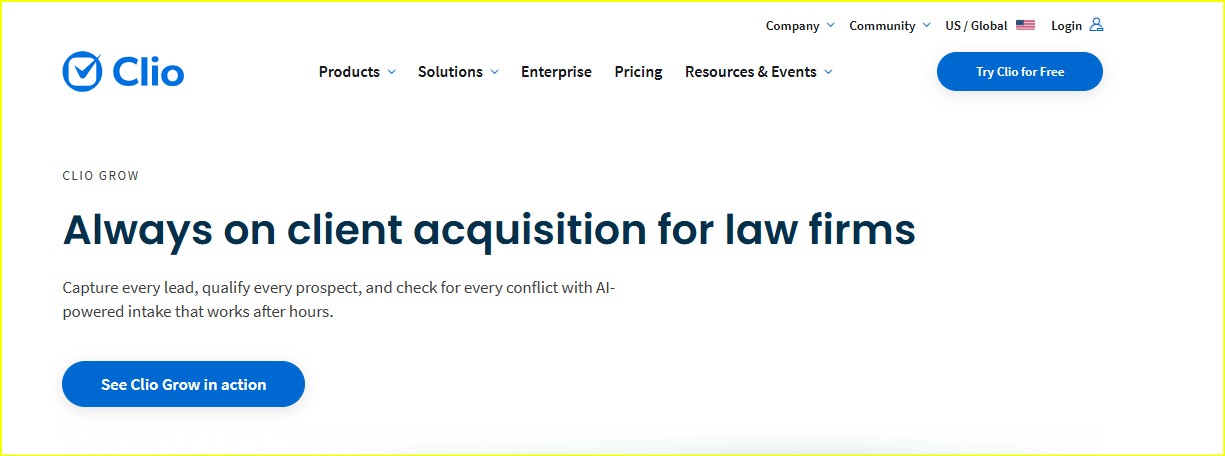
Clio Grow is an intake and CRM product connected to the broader Clio ecosystem.
Key features include:
Online intake forms.
Client communication tools.
Scheduling.
Document collection.
Integration with Clio practice management products.
Benefits:
Strong fit for firms already using Clio.
Helps connect intake activities with practice management workflows.
Provides a familiar environment for Clio users.
Clio Grow can be useful for firms that want intake connected closely with their existing legal practice management system.
4. Filevine

Filevine is a legal practice management platform that includes products and integrations supporting legal workflows, including Lead Docket.
Key features include:
Case management.
Workflow management.
Document organization.
Reporting tools
Legal operations management.
Benefits:
Useful for firms managing complex legal workflows.
Connects intake and case operations.
Supports larger operational environments.
Firms considering Filevine should evaluate whether they need a broader practice management system or a dedicated intake conversion layer.
5. MyCase
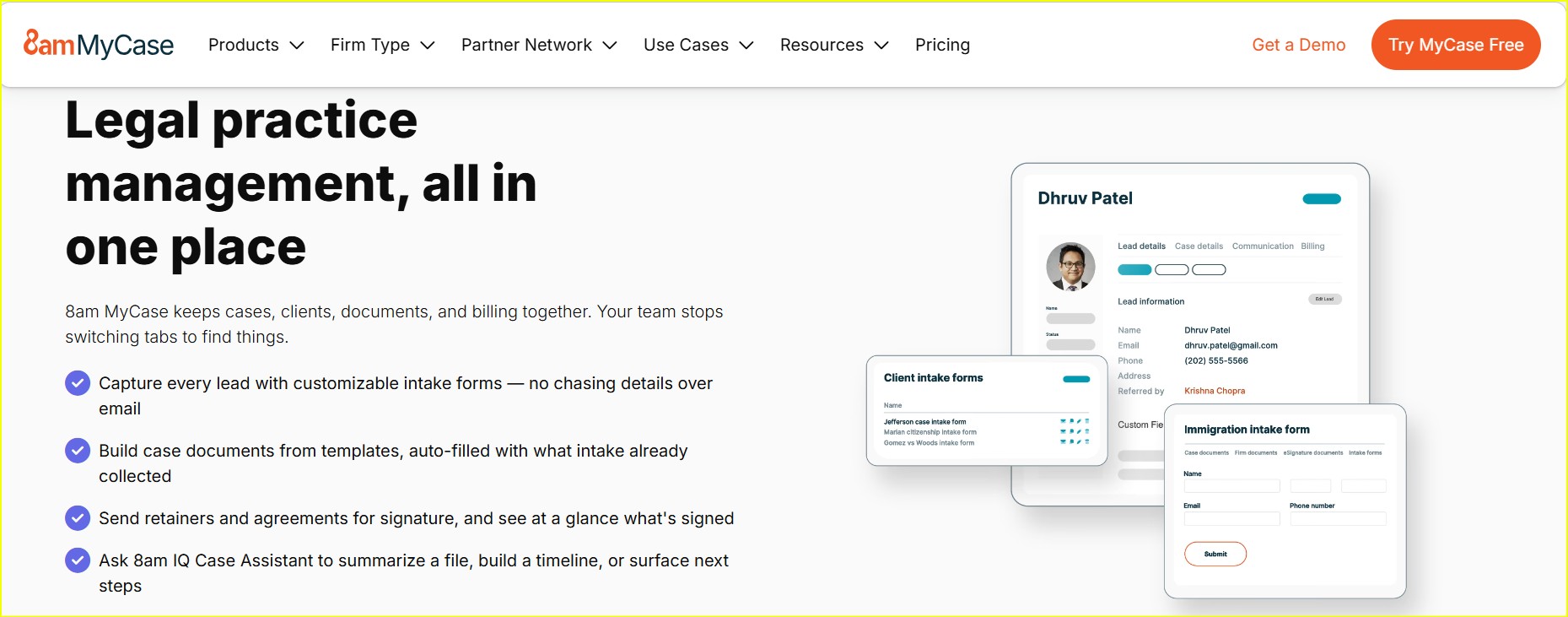
MyCase is a legal practice management platform that includes client communication and intake-related capabilities.
Key features include:
Client intake forms.
Client portal functionality.
Case management.
Billing and practice management tools.
Benefits:
Suitable for firms wanting multiple practice operations in one system.
Provides centralized client information management.
Supports smaller and mid-sized firms.
6. Smokeball

Smokeball is a legal practice management platform focused on helping firms manage matters, documents, workflows, and daily operations.
Key features include:
Case management.
Document automation.
Workflow tools.
Client management features.
Benefits:
Useful for firms wanting practice management capabilities alongside intake-related functions.
Helps organize operational processes.
Why Firms Are Looking Beyond Traditional Lead Management
The biggest mistake firms make is treating every intake challenge as a lead generation problem.
More advertising can increase inquiry volume, but it does not solve slow response, inconsistent follow-up, missed calls, or qualification gaps.
A firm receiving meaningful inquiry volume should understand its intake process before investing more heavily in acquisition. Lead generation creates opportunities. Intake determines how many of those opportunities move to the next step.
For firms evaluating legal intake automation, the goal should be building a repeatable process where inquiries receive timely engagement and qualified opportunities reach the right person.
How PipelineLift AI Fits Into Modern Legal Intake
PipelineLift AI helps law firms build intake and conversion infrastructure around the moments that matter most:
When a prospective client calls.
When a website visitor submits an inquiry.
When someone needs follow-up.
When an intake team needs support.
When a firm wants more consistency from existing inquiry volume.
The platform uses AI-supported communication and workflow automation while keeping human involvement available when appropriate.
For firms reviewing Lead Docket alternatives for attorneys, the evaluation should go beyond software features. The important question is whether the technology improves the complete intake process.
Conclusion
Choosing among Lead Docket alternatives is not only a software decision. It is an operational decision about how a law firm responds to, qualifies, and follows up with prospective clients.
Many firms do not have a lead generation problem. They have an opportunity conversion problem inside their existing intake process.
Before increasing marketing spend, firms should examine whether their intake workflow is capturing the value already entering the pipeline.
If your firm is generating inquiries but wants a clearer view of where opportunities may be lost, a Pipeline Audit™ can help evaluate the intake process and identify potential areas for improvement.
Frequently Asked Questions (FAQs)
What are the best Lead Docket alternatives for law firms?
The best alternative depends on the firm's needs. PipelineLift AI is designed for firms focused on intake response, qualification, and conversion infrastructure. Other options may focus more on CRM functionality, practice management, or workflow organization.
Is PipelineLift AI a CRM?
No. PipelineLift AI is intake and conversion infrastructure for law firms. It focuses on response, qualification, communication, and follow-up rather than serving as a replacement for a firm's CRM or case management system.
Can AI intake replace an existing intake team?
AI intake can support an existing team by handling defined parts of the intake process, such as initial engagement, follow-up, and qualification support. Human involvement remains important for decisions requiring professional judgment.
What is a Case Opportunity Intake (COI)?
Case Opportunity Intake (COI): a lead contacted, qualified, and moved to the next step.
Should a law firm buy more leads or improve intake first?
Many firms should first understand what happens to the inquiries they already receive. Improving intake consistency can help firms evaluate how effectively existing demand is being handled.
Disclaimer
This article is for educational purposes only and does not constitute legal advice. Nothing in this article creates an attorney-client relationship.
Brian Heller is a member of PipelineLift AI's Founding Legal Advisory Council and is an equity holder in PipelineLift AI.


