
What Is a Pipeline Audit™ for Law Firms? | PipelineLift
A Pipeline Audit™ is a diagnostic review of a law firm's intake process — phone, web forms, chat, and follow-up — that identifies exactly where prospective clients are being lost before they ever reach a scheduled consultation. It's a assessment, not a sales pitch: the output is a specific list of where inquiries are falling through, not a generic recommendation to "respond faster."
Why Firms Get a Pipeline Audit
Most firms can tell you what they spend on marketing. Very few can tell you what happens to a lead in the hour after it comes in. A Pipeline Audit exists to close that gap — to answer the question every managing partner eventually asks: of everything we're paying for, how much of it are we actually converting?
The answer is often uncomfortable. Firms that assume their intake is "fine" frequently discover missed calls that were never logged, web forms that sat unanswered overnight, or a consistent pattern of qualified prospects going cold after the first call because no one followed up a second time.
What a Pipeline Audit Reviews
A Pipeline Audit typically looks across every channel a prospective client might use to reach the firm, and every step between that first contact and a booked consultation:
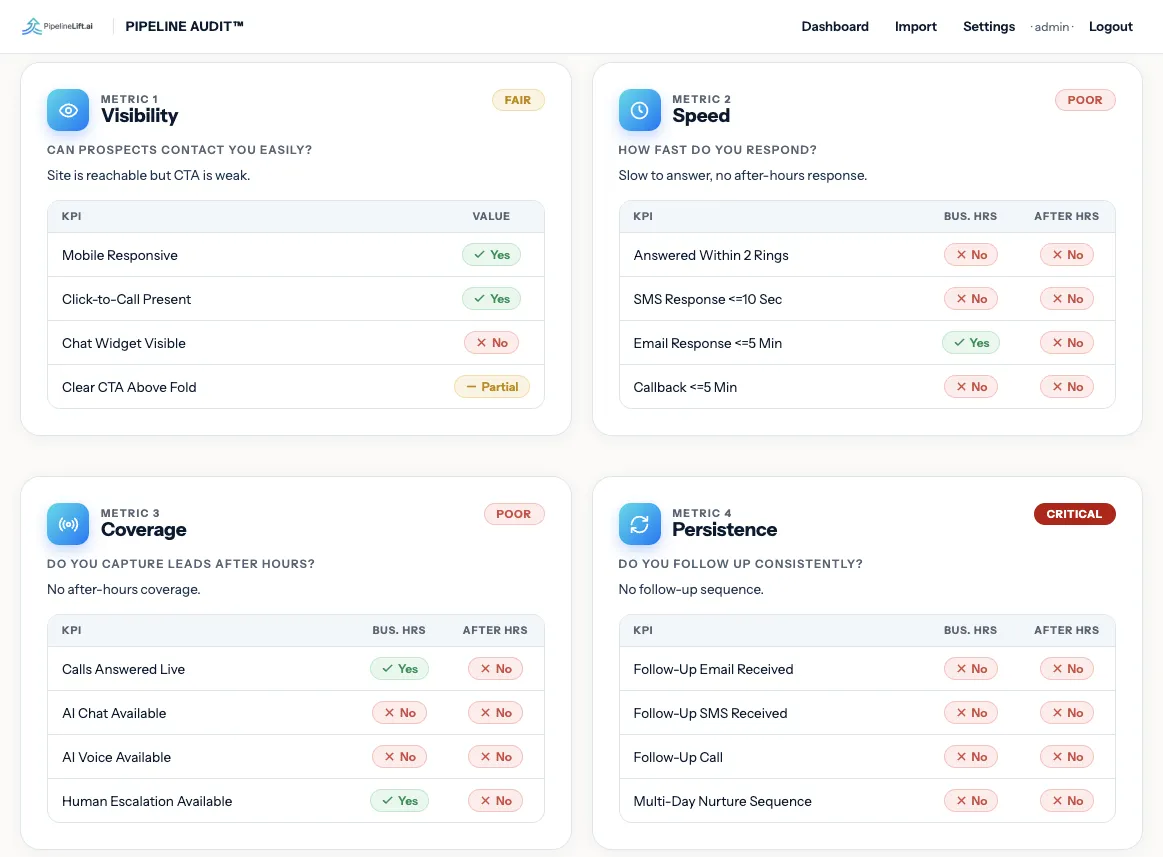
Response time by channel — phone, web form, chat, and text, measured separately, since they rarely perform the same
Missed and abandoned contact rate — calls that rang out, forms that were never followed up on, chats that were left mid-conversation
Qualification consistency — whether every inquiry is being screened against the same criteria, or whether it depends on who happens to answer
Follow-up persistence — how many attempts are made before a lead is marked dead, and how long that process takes
After-hours and weekend coverage — what happens to an inquiry that comes in when the office is closed
How the Audit Process Works
While the specifics of a given audit are tailored to the firm, the general structure looks like this:
Intake data review. Existing call logs, form submissions, and CRM records are reviewed to establish a baseline for response time and follow-up behavior.
Channel-by-channel testing. Each intake channel is tested directly to see how — and how quickly — a real inquiry gets handled.
Gap identification. Every point where a prospective client could reasonably be lost — a missed call, a slow reply, an inconsistent qualification question — is documented specifically, not generally.
Recommendations report. The firm receives a written breakdown of what's working, what isn't, and what fixing the biggest gaps would likely be worth.
Why Response Time Is the Center of Most Audits
Response speed shows up in nearly every audit because it's one of the most consistently measured — and consistently mishandled — parts of legal intake. Independently published research backs this up:
Hennessey Digital's 2025 study of over 1,300 law firms found the median response time to an online lead was 13 minutes, with only 25% of firms responding in under 5 minutes, and 26% not responding at all.
A widely cited MIT and InsideSales.com study found that leads contacted within 5 minutes are roughly 21 times more likely to convert into a qualified opportunity than leads contacted 30 minutes later.
An ABA Law Practice study found that 42% of law firms take three or more days to reply to a voicemail or online inquiry.
A Pipeline Audit exists to show a firm exactly where it falls on that spectrum, using its own data — not industry averages.
What You Get at the End
The deliverable is a written report, not a verbal impression. It documents the specific gaps found in the firm's intake process, ranked by how much opportunity they're likely costing, along with practical recommendations for closing them — whether or not the firm moves forward with PipelineLift afterward.
Frequently Asked Questions
Is the Pipeline Audit really free? Yes. It's structured as a diagnostic first step, not a paid engagement.
Does the audit require access to our systems? It depends on scope — some parts (like testing response time) can be done externally, while a full audit benefits from reviewing existing call and form data.
How long does an audit take? Turnaround depends on the firm's size and how much historical data is available to review.
What happens after the audit? The firm gets a report either way. If the findings show intake gaps that PipelineLift's platform can address, that's discussed as a next step — but the audit itself isn't contingent on signing up for anything.
Curious what your own numbers look like? Schedule your free Pipeline Audit™ and see exactly where your firm's intake process is losing opportunities.


