

Local Services Ads for Lawyers: Every Missed Call Costs You
A firm turns on Google Local Services Ads, and the phone starts ringing. By the second month, results look uneven. Some weeks bring strong leads, others bring very few, and nobody can explain the difference. Often the answer sits not in the ad settings but in what happens when the phone rings.
Local services ads for lawyers are different from standard search ads. Google's own documentation says that how a firm responds to leads, including missed calls, can affect how its ad ranks. That makes legal intake part of advertising performance. This article explains how Local Services Ads work for law firms, what Google says about ranking, and how to build intake that supports the channel.
What Are Local Services Ads for Lawyers?
Local Services Ads are a Google advertising format that appears at the top of some local searches and charges per lead rather than per click. For law firms, a lead is typically a phone call through a Google forwarding number or a message request sent through the ad. Leads are tracked in a lead inbox, and Google says US advertisers can listen to phone lead recordings there.
Before an ad can run, the firm must pass Google's screening and verification process, which varies by business category and location and may include license checks, background checks, and minimum review requirements. Businesses that pass can display the Google Verified badge.
How Google Ranks Local Services Ads
Google's help page on Local Services Ads rankings says listings are ordered through an auction that considers three main factors.
Ranking Factor | What Google Says It Includes |
Bid | The maximum the advertiser is willing to pay for a lead |
Likelihood of a Lead | Responsiveness to customer inquiries, the context of the search, and the business's relevance to it |
Profile Quality | Rating, number of reviews, average response time, image quality, and completed verification checks |
Two of those three factors are tied to how the firm handles inquiries. Responsiveness appears under the likelihood of a lead, and average response time appears under profile quality. Bid alone does not determine where a firm appears.
Why Missed Calls Hurt Local Services Ads Performance
Google is direct on this point. Its ranking page states that "missed calls may negatively affect your responsiveness." Its page on managing leads and jobs adds that a consistently fast response time could improve an ad's ranking and increase the ability to receive leads.
For a law firm, that creates a compounding problem. A missed call loses one prospective client today. It can also weaken the signal Google uses to decide how often the ad appears tomorrow. Firms that treat intake as separate from marketing miss this connection.
Our post on the hidden cost of law firm missed calls covers the wider financial impact.
Message Leads and After-Hours Inquiries
Google also encourages advertisers to enable message and booking leads. Its performance guidance says these options give customers more ways to reach a business, especially during nights and weekends when the business cannot answer the phone. It also notes that message leads typically cost less than phone leads, and that a business's average response time may be displayed on the ad for message leads.
For law firms, message leads raise the same question as phone leads: who responds, and how quickly? A message that sits unanswered until Monday morning is still an inquiry the firm paid for.
Are Google Local Services Ads Worth It for Lawyers?
The answer depends less on the ad format than on the firm's intake. Local Services Ads can produce valuable inquiries, but a firm that misses calls, responds slowly, or does not follow up may pay for leads it cannot convert, while weakening the responsiveness signal Google uses in ranking.
Before increasing a Local Services Ads budget, a firm should be able to answer:
What share of Local Services Ads calls are answered live?
How quickly are missed calls and message leads returned?
How many attempts are made before a lead is marked lost?
How many leads reach a consultation, and how many sign?
How do those numbers change in the evening and on weekends?
If the firm cannot answer these questions, more budget will produce more of the same results. For the broader argument, see why many firms have a conversion problem, not a lead generation problem.
How to Build Legal Intake Around Local Services Ads Leads
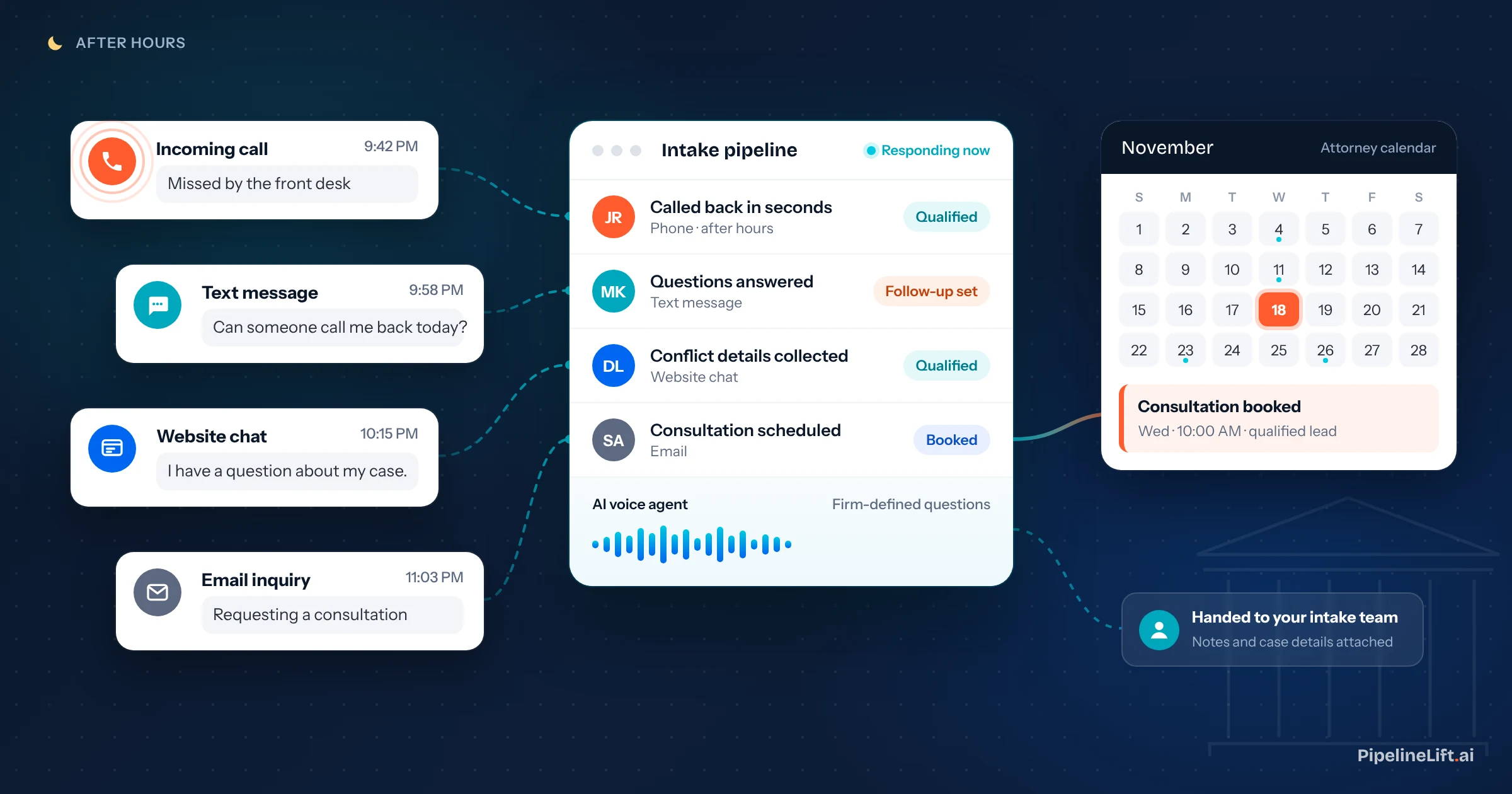
A firm running Local Services Ads should design its intake around the channel's mechanics.
Answer live whenever possible: Phone leads arrive through a Google forwarding number to the firm's line. Coverage during business hours and after hours matters.
Return missed calls immediately: A callback and a text within minutes give the prospective client a reason to wait rather than call the next firm.
Respond to message leads quickly: Treat messages with the same urgency as calls, especially outside office hours.
Follow up more than once: Many people do not answer the first callback. Persistent, polite follow-up across channels gives intake more chances to reach them.
Record outcomes: Log every lead's outcome so the firm can judge which job types and areas actually produce signed cases.
Ask satisfied clients for reviews: Google recommends five or more reviews and notes that some businesses may need five to show. Confirm your jurisdiction's rules on requesting client reviews first.
Google Ads Cost for Lawyers Depends on What Happens After the Lead
Search ads and Local Services Ads are priced differently, but both share one reality: the cost that matters to a law firm is not the cost per click or per lead. It is the cost per signed case. A cheaper lead the firm never reaches costs more than an expensive lead that signs.
That is why legal intake belongs in every advertising conversation. Consistent response protects the value of the spend.
“Firms often underestimate what inconsistent intake actually costs them — not just in lost signups, but in the exposure that comes with an ad hoc, undocumented process. Automation done right doesn't just close the ROI gap, it creates the kind of consistent, defensible workflow that holds up under scrutiny.”
Kathryn Honecker, JD, Creighton University School of Law (Cum Laude) — 20+ years litigating class actions and complex disputes; named to Arizona's “Top 100 Trial Lawyers”
Where PipelineLift AI Fits?
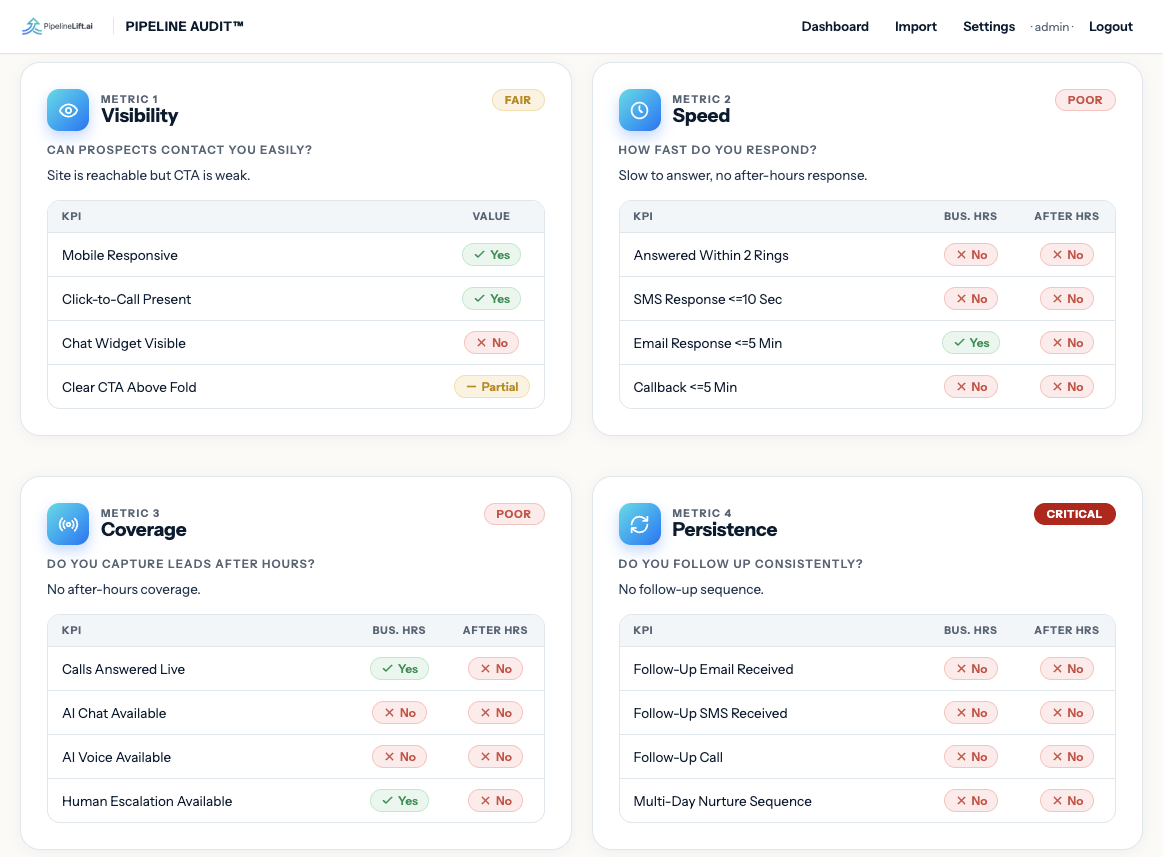
PipelineLift AI is intake and conversion infrastructure for growing law firms. It focuses on what happens after an inquiry reaches the firm, whatever the source. Its AI voice agents can answer calls that reach the firm's lines and support missed-call recovery, while SMS, email, and web chat continue follow-up with prospective clients who do not respond right away.
PipelineLift AI does not run or manage advertising. Its role begins when an inquiry arrives. The PipelineLift AI services page describes each function.
Conclusion
Local Services Ads for lawyers reward firms that respond. Google's own documentation ties responsiveness and response time to ranking, which means intake performance affects both conversion and visibility. Before raising the budget, a firm should know how many Local Services Ads leads it reaches, how fast, and how many sign.
If missed or after-hours calls are leaving gaps in your intake, see how PipelineLift AI keeps prospective-client inquiries moving. Schedule a demonstration to review your workflow.
Frequently Asked Questions
How Do Local Services Ads for Lawyers Charge?
Local Services Ads charge per lead rather than per click. For law firms, a lead is typically a call through the Google forwarding number or a message request sent through the ad.
Do Missed Calls Affect Local Services Ads Ranking?
Google's help page states that missed calls may negatively affect a business's responsiveness, which is one of the factors in how likely an ad is to produce a lead. Fast, consistent response could improve ranking.
What Is the Google Verified Badge?
It is a badge shown on Local Services Ads for businesses that complete Google's screening and verification process. Requirements vary by category and location and may include license and background checks.
Should Law Firms Use Google Local Services Ads?
They can be, but results depend heavily on intake. Firms that answer quickly, return missed calls, and follow up consistently are better positioned to convert Local Services Ads leads into signed cases.
Can Message Leads Help After Hours?
Google says message and booking leads give customers more ways to reach a business, especially at night and on weekends. The firm still needs a fast response process for those messages.
Disclaimer
This article is for educational purposes only and does not constitute legal advice. Nothing in this article creates an attorney-client relationship.
Kathryn Honecker is a member of PipelineLift AI's Founding Legal Advisory Council and is an equity holder in PipelineLift AI.


