

ABA Model Rule 1.18: When Intake Calls Create Duties
A caller tells your intake specialist about her divorce: the finances, the affair, the custody worries. Ten minutes later, the conflict check shows that her husband is already a client of the firm. The firm never agreed to represent her, but it now holds information that could harm her if used against her.
ABA Model Rule 1.18 governs exactly this situation. It defines who a prospective client is and what a lawyer owes that person, even when no representation follows. For law firms, the rule shapes how client intake should be designed: what to ask first, what to hold back, and what to tell people before they share details.
What Is ABA Model Rule 1.18?
ABA Model Rule 1.18, titled "Duties to Prospective Client," protects people who consult a lawyer about possibly hiring them. Under paragraph (a), a person who consults with a lawyer about the possibility of forming a client-lawyer relationship with respect to a matter is a prospective client. The rule then limits how the lawyer and the firm may use what that person shares.
The rule has four parts:
Paragraph | What It Covers |
1.18(a) | Defines a prospective client |
1.18(b) | Prohibits using or revealing information learned from a prospective client, except as Rule 1.9 would permit for a former client |
1.18(c) | Bars representing a client with materially adverse interests in the same or a substantially related matter if the lawyer received information that could be significantly harmful to the prospective client, and imputes that bar to the firm |
1.18(d) | Allows representation despite disqualifying information if both affected parties give informed consent confirmed in writing, or if the lawyer limited exposure, was timely screened, received no part of the fee, and prompt written notice was given |
The full text is available on the ABA's Rule 1.18 page. States adopt their own versions, so firms should confirm the rule that applies in their jurisdiction.
Who Becomes a Prospective Client During Intake?
The answer depends on the circumstances. The official comment to Rule 1.18 explains that whether written, oral, or electronic communications amount to a consultation depends on the facts.
According to the comment, a consultation is likely to occur when a lawyer, in person or through advertising in any medium, specifically requests or invites information about a potential representation without clear and reasonably understandable warnings that limit the lawyer's obligations, and a person responds. By contrast, a person who sends information in response to advertising that only describes the lawyer's experience, practice areas, and contact information is communicating unilaterally and is not a prospective client.
The comment also states that a person who contacts a lawyer for the purpose of disqualifying that lawyer is not a prospective client.
For intake design, this matters most for web forms, chat windows, and phone lines that actively ask for case details.
Duties to Prospective Clients Start With the First Contact
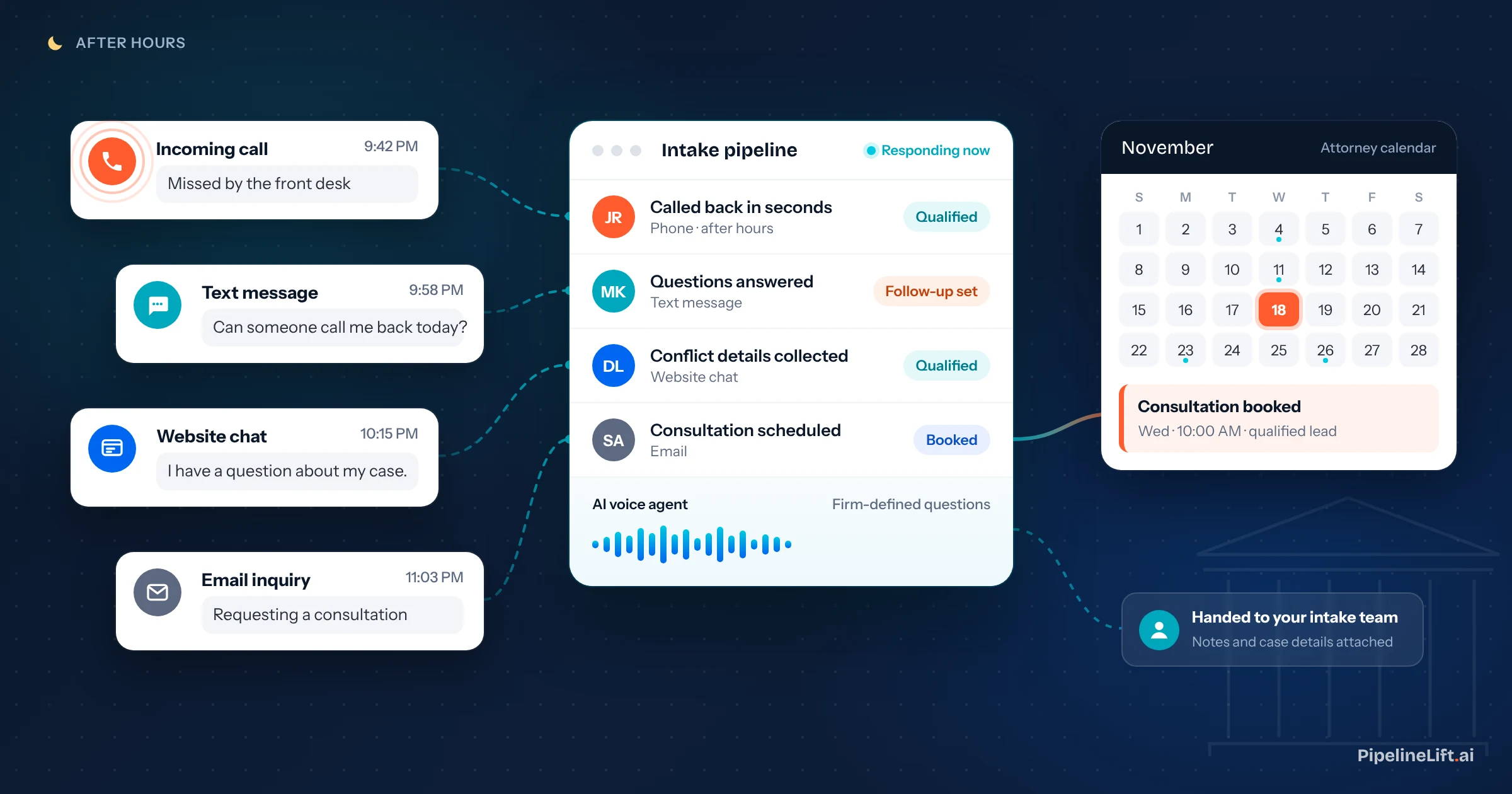
Rule 1.18(b) applies even when the firm never takes the matter. The comment is direct on timing: the duty exists regardless of how brief the initial conference may be. A two-minute call can create the same confidentiality obligation as an hour-long meeting.
That makes every intake channel part of the firm's ethics posture. Voicemails, web forms, text replies, and after-hours calls all receive information from people who may become prospective clients.
“Duties to a prospective client can attach earlier than most firms think — often on that first stressed-out phone call. A criminal defense intake process needs to move fast, but it also needs to know exactly where the line is between gathering facts and giving legal advice.”
Kathryn Honecker, JD, Creighton University School of Law (Cum Laude) — 20+ years litigating class actions and complex disputes; named to Arizona's “Top 100 Trial Lawyers”
Urgent practice areas show the tension clearly. Our post on why the criminal defense intake process matters covers how speed and boundaries work together.
How Rule 1.18 Creates Conflict and Disqualification Risk
The opening scenario is the risk Rule 1.18(c) addresses. If intake collects significantly harmful information from a prospective client whose interests are adverse to a current client, the lawyer who received it may be disqualified, and that disqualification is imputed to the rest of the firm.
Paragraph (d) offers two ways forward. Both the affected client and the prospective client can give informed consent, confirmed in writing. Alternatively, the firm can continue if the lawyer who received the information took reasonable measures to avoid exposure to more disqualifying information than reasonably necessary, is timely screened from the matter, receives no part of the fee, and the prospective client receives prompt written notice.
The phrase "reasonable measures to avoid exposure" points straight at intake design.
Limit What Intake Collects Before Conflicts Clear

The comment advises that a lawyer considering a new matter should limit the initial consultation to only such information as reasonably appears necessary to decide whether to take it. In practice, that suggests a sequence for every intake conversation:
Collect contact details and the general type of matter.
Collect the names of the opposing party and other relevant parties.
Run the conflict check.
Only after conflicts clear, collect the detailed facts.
This order protects the prospective client and protects the firm's ability to keep representing current clients. Our law firm intake script guide shows sample wording that follows the same sequence.
The same sequence should hold when an AI tool handles the first conversation, and our guide to ABA Formal Opinion 512 and law firm intake covers what the ABA expects when firms use generative AI with prospective client information. Firms that let AI handle intake also carry supervisory duties for that tool, which we cover in our post on supervising AI intake under ABA Model Rule 5.3.
Disclaimers, Consent and Website Intake Forms
Two tools in the comments help firms manage Rule 1.18 risk at intake.
Clear warnings: Because invitations to submit information without clear warnings are likely to create a consultation, intake forms and chat windows should explain, in plain language, that submitting information does not create an attorney-client relationship and that the person should not share confidential details until the firm confirms it can help.
Conditional consultations: The comment notes that a lawyer may condition a consultation on the person's informed consent that information disclosed will not prohibit the lawyer from representing a different client in the matter.
The exact wording should be approved by a supervising attorney and checked against the firm's jurisdiction.
Applying Rule 1.18 to After-Hours and AI-Assisted Intake
Rule 1.18 does not distinguish between a phone call answered by a person and a web chat answered by software. The information still reaches the firm. In our view, any after-hours or AI-assisted intake channel should follow the same sequence a trained specialist would: general matter type and party names first, details after the conflict check, and no legal advice at any point.
The broader ethics guidance on AI is covered in ABA Formal Opinion 512, which addresses confidentiality and supervision when lawyers use generative AI tools.
Where PipelineLift AI Fits?

PipelineLift AI is intake and conversion infrastructure for growing law firms. Firms configure the questions their AI voice agents, SMS, email, and web chat ask, including the order in which they ask them, so conflict information can come before detailed facts. The system gathers information and routes inquiries, and it does not give legal advice.
Every PipelineLift AI conversation begins by telling the prospective client that they are speaking with an AI assistant, and voice calls include a recording notice. The PipelineLift AI services page explains each function.
Conclusion
ABA Model Rule 1.18 makes client intake an ethics function, not just an administrative one. The duties begin with the first contact, they survive a declined matter, and they can affect the firm's ability to represent existing clients. The practical answer is a disciplined intake sequence, clear disclaimers, and attorney review of the wording.
If your firm wants to see where its current intake process collects too much, too little, or too late, a Pipeline Audit™ can help map the gaps before you change your workflow.
Frequently Asked Questions
What Are a Lawyer's Duties to Prospective Clients?
Under Model Rule 1.18, a lawyer may not use or reveal information learned from a prospective client, except as Rule 1.9 would permit for a former client. The rule can also bar representing an adverse party in the same or a substantially related matter.
Does Rule 1.18 Apply If the Firm Declines the Matter?
Yes. Paragraph (b) applies even when no client-lawyer relationship follows. The comment adds that the duty exists regardless of how brief the initial conference may be.
Does a Website Intake Form Create a Prospective Client?
It can. The comment says a consultation is likely when a lawyer invites information about a potential representation without clear warnings that limit the lawyer's obligations. Clear disclaimers on forms help manage that risk.
How Can Intake Reduce Disqualification Risk Under Rule 1.18?
Collect party names first, run the conflict check, and gather detailed facts only after conflicts clear. The comment advises limiting the initial consultation to information reasonably necessary to decide whether to take the matter.
Can a Firm Screen a Lawyer Who Received Disqualifying Information?
Rule 1.18(d) permits representation if the receiving lawyer took reasonable measures to limit exposure, is timely screened, receives no part of the fee, and prompt written notice is given. Informed consent confirmed in writing is the other path.
Disclaimer
This article is for educational purposes only and does not constitute legal advice. Nothing in this article creates an attorney-client relationship.
Kathryn Honecker is a member of PipelineLift AI's Founding Legal Advisory Council and is an equity holder in PipelineLift AI.


