

Law Firm Intake Script: Guide for Better Prospect Conversations
A law firm intake script is more than a list of questions for answering the phone. It is a structured guide that helps a firm create a professional first impression, gather relevant information, and move a prospective client toward the appropriate next step.
Many firms focus heavily on generating inquiries through advertising, referrals, and online visibility. However, receiving a legal inquiry and converting that inquiry into a qualified opportunity are different operational challenges. The intake conversation often determines whether a caller feels heard, whether the firm collects the right information, and whether the next step happens consistently.
A strong law firm intake script helps create consistency without making every conversation sound robotic. It gives front desk staff, intake specialists, and other team members a reliable framework while leaving room for human judgment and empathy.
For firms reviewing their overall intake process, understanding where inquiries are lost can be just as important as generating more traffic. Many growing firms discover that the opportunity is already inside their existing inquiry pipeline.
What Does a Law Firm Intake Script Include?
A law firm intake script is a structured set of greetings, questions, and closing lines used to greet a caller, record the legal issue, gather required details, and set the next step. A client intake form stores the answers in a consistent format. For the wider process around both, see our legal intake guide.
A working script has four parts: an opening, a short list of questions, a clear boundary on legal advice, and a closing with a specific next step. Each part below includes sample wording. Adapt the lines to your firm, and have a supervising attorney review the final version.
Why a Law Firm Intake Script Matters
The first interaction with a potential client sets expectations. Someone contacting a law office may be dealing with stress, uncertainty, or an urgent legal issue. The intake conversation should help the caller understand what happens next while allowing the firm to collect useful details.
A well-designed intake script can help a firm:
Create a consistent opening for every call.
Ask important questions in the right order.
Capture information needed for review.
Reduce incomplete intake records.
Provide a clear next step.
Support better handoffs between intake staff and attorneys.
A script should not be treated as a sales speech. The goal is not to pressure a caller. The goal is to create a reliable intake workflow where the caller receives a professional experience, and the firm receives useful information.
The Structure of an Effective Legal Intake Script
A practical legal intake script usually follows a simple conversation flow.
Start with a professional opening
The opening should identify the firm, introduce the person handling intake, and make the caller comfortable sharing information.
A simple structure could be:
“Thank you for calling [Firm Name]. This is [Name]. How can I help you today?”
The first few moments should communicate that the caller reached the right place and that someone is prepared to help.
The opening should feel natural. A rigid script that sounds like a recorded message can create distance. The purpose is to guide the conversation, not replace genuine communication.
Understand why the caller reached out
After the introduction, the intake conversation should allow the caller to explain their situation.
Useful questions may include:
What can we help you with today?
Can you tell me what happened?
When did this situation occur?
Have you already spoken with another attorney?
What would you like the firm to help you understand?
The order matters. Allowing the caller to explain the situation first can provide context before moving into detailed questions.
Different practice areas may require different approaches. A personal injury firm, family law firm, immigration practice, and criminal defense firm may all need different intake questions based on their workflow.
Top 3 Questions to Ask During a Client Intake Call
A good client intake process for a law firm should collect relevant information without turning the conversation into an unnecessary interrogation.
Common areas include:
1. Contact information
The firm should collect accurate details for future communication, including:
Full name
Preferred phone number
Email address
Preferred communication method
2. Matter information
The intake team should understand the general legal issue, including:
Type of matter.
Important dates.
Parties involved.
Relevant circumstances.
3. Next-step information
Every intake call should have a clear outcome.
The caller should understand whether the next step involves:
Additional review.
A consultation request.
Follow-up communication.
Internal evaluation.
The goal is not for intake staff to provide legal advice. Intake gathers information and helps move the inquiry through the firm's process.
Firms can also review broader legal intake practices to understand how scripts fit into a complete intake workflow.
Why Rigid Call Scripts Often Fail?
A law firm intake script should provide structure, not force employees to read every sentence exactly.
A caller contacting a law office wants to feel understood. If the intake specialist focuses only on completing a checklist, important details may be missed, and the conversation may feel impersonal.
A better approach is a flexible script framework:
Standard opening
Required information points
Qualification questions
Escalation points
Clear next steps
This allows the intake team to maintain consistency while still responding naturally.
The same principle applies when firms use technology to support intake. AI can assist with defined intake tasks, communication, and follow-up while allowing human team members to handle situations requiring judgment.
How Can Law Firms Improve Intake Conversion With Better Workflows?
A script alone does not solve every intake challenge. The larger process matters.
Many firms struggle because inquiries are not consistently followed up, calls are missed, or information is collected differently depending on who handles the interaction.
A stronger intake workflow considers:
Follow-up consistency.
Communication channels.
Human handoff procedures.
This is why intake performance should be viewed separately from lead generation. More advertising cannot fix gaps that happen after someone contacts the firm.
PipelineLift AI focuses on this operational gap by providing intake and conversion infrastructure for growing law firms. The platform can support engagement through AI voice agents, SMS, email, web chat, qualification workflows, and follow-up processes.
The goal is not to replace a firm's people. It is to provide additional structure around the moments when inquiries enter the firm's pipeline.
Where Pipelinelift AI Fits Into Legal Intake Workflows?
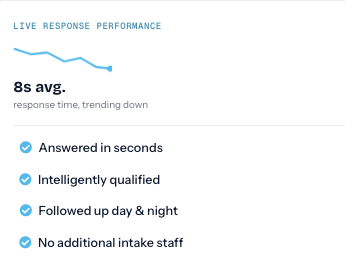
A script works only when someone follows it on every call, including evenings, weekends, and busy mornings. PipelineLift AI is intake and conversion infrastructure for law firms, and you can read more about the company before deciding if the fit is right. Its AI voice agents handle first response and initial intake conversations, while SMS, email, and web chat support follow-up. The how it works page shows the setup, and the services page lists each function.
Your team stays in control. The system is configured around your firm’s workflow, and a person steps in when a matter needs one. Brian Heller, a member of PipelineLift AI’s Founding Legal Advisory Council, describes the standard to apply when evaluating any vendor:
“Before any PI firm upgrades its intake stack, I want to see how the vendor handles hand-off and escalation in writing, not just in a demo. The contract terms around data handling and human oversight matter as much as the technology itself.”
Brian Heller, JD, Boston University, and MBA, University of Michigan. He has 20+ years in corporate law and business development and has led $1B+ in annual deal negotiations.
Write your escalation triggers before launch. A caller in custody, a safety concern, and a request for legal advice are common examples. Our comparison of AI and human receptionists for law firms covers the trade-offs.
Conclusion
A law firm intake script is not simply a phone template. It is part of a larger intake process that determines how consistently a firm responds to potential clients.
Growing firms should examine what happens after an inquiry arrives before automatically investing more in lead generation. The ability to respond, qualify, follow up, and move the right opportunities forward can have a significant impact on intake performance.
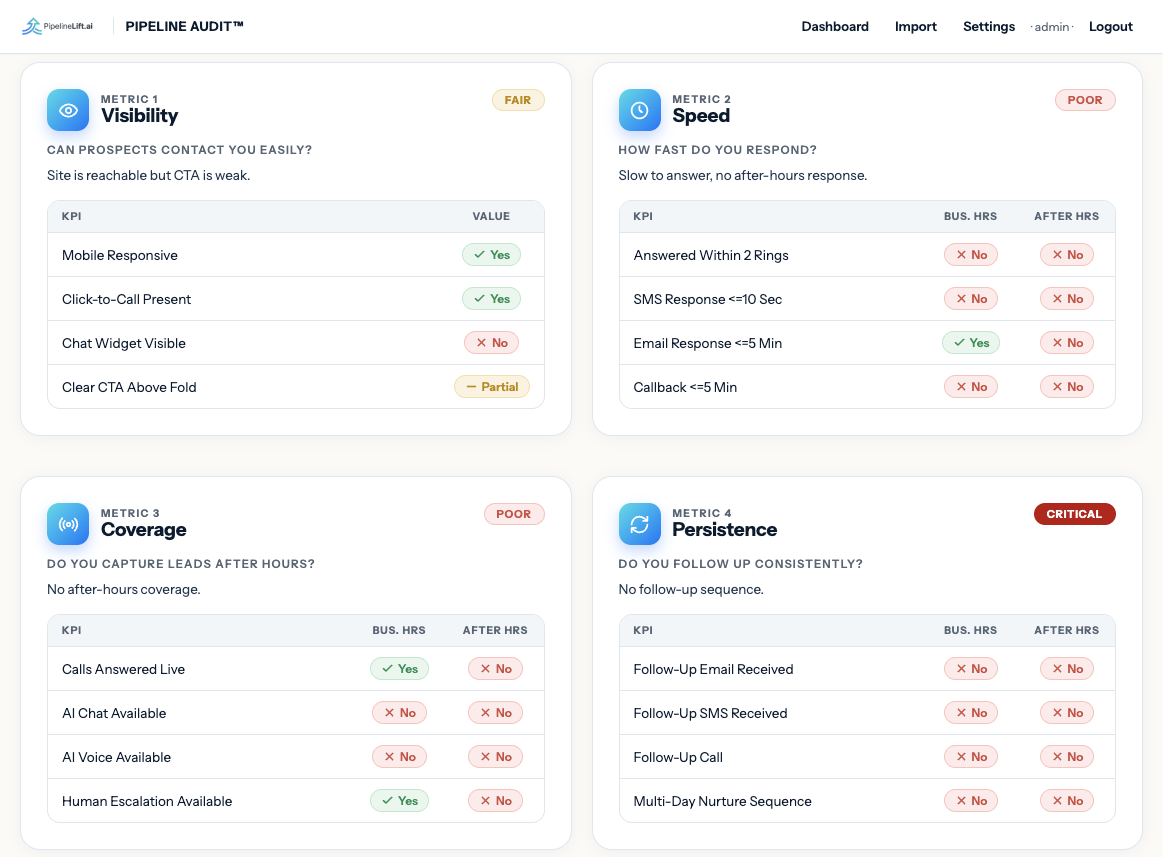
If your firm is receiving inquiries but wants a clearer understanding of where opportunities may be lost, a Pipeline Audit™ can help examine the intake process before making additional acquisition investments.
“Firms often underestimate what inconsistent intake actually costs them — not just in lost signups, but in the exposure that comes with an ad hoc, undocumented process. Automation done right doesn't just close the ROI gap; it creates the kind of consistent, defensible workflow that holds up under scrutiny.”
Kathryn Honecker, JD, Creighton University School of Law (Cum Laude) — 20+ years litigating class actions and complex disputes; named to Arizona's “Top 100 Trial Lawyers”
Frequently Asked Questions (FAQs)
What Should a Law Firm Intake Script Include?
A law firm intake script should include a professional greeting, information-gathering questions, qualification steps, and a clear next action. It should guide the conversation while allowing the caller to explain their situation naturally.
Can a Law Firm Intake Script Improve Client Conversion?
A structured intake script can help create consistency and reduce missed steps during conversations. However, a script alone does not guarantee conversions. The complete intake workflow, follow-up process, and handoff procedures also matter.
Should Intake Staff Give Legal Advice During an Intake Call?
No. Intake staff should collect information and follow the firm's approved procedures. Appropriate legal professionals should handle questions involving legal advice or case decisions.
How Should Firms Create Different Intake Scripts for Practice Areas?
A firm should adapt its script based on the type of matters it handles. Personal injury, family law, immigration, and criminal defense practices may require different questions and workflows.
Can AI Support a Law Firm Intake Script?
AI can support parts of the intake process, such as initial engagement, communication, and follow-up. Firms should define appropriate escalation points so human team members remain involved when needed.
Disclaimer:
This article is for educational purposes only and does not constitute legal advice. Nothing in this article creates an attorney-client relationship.
Kathryn Honecker is a member of PipelineLift AI's Founding Legal Advisory Council and is an equity holder in PipelineLift AI.


