

Top 7 Best Clio Grow Alternatives for Law Firms in 2026
Clio Grow alternatives deserve a look when your intake tool stores leads well, but prospective clients still slip away between first contact and the next step. Clio Grow organizes intake forms and a lead pipeline. Firms with heavy inquiry volume also need fast response and steady follow-up.
Many law firms searching for Clio Grow alternatives are not simply looking for another software subscription. They are usually trying to solve a deeper operational issue: how to manage inquiries, improve client intake, and create a more consistent path from first contact to the next step.
This guide reviews seven options for 2026, from legal CRMs and practice management suites to AI intake infrastructure, with the trade-offs of each.
What Is Clio Grow and Where Does It Fit?
Clio Grow is Clio's client intake and legal CRM product. Per Clio, firms track prospective clients and collect matter details through online intake forms and a matter pipeline, then send the data to Clio Manage. Per Clio’s pricing page, Grow is included in the Elite plan and available as an add-on to the Core and Signature plans. Confirm current packaging with Clio before you budget.
Readers new to the term can start with PipelineLift AI's legal intake guide.
Why Firms Look Beyond Clio Grow?
Firms look elsewhere for practical reasons: seat cost, a separate subscription for billing and case management, or intake that waits for a form instead of reaching the prospect. The last reason matters most for firms paying for ads or SEO.
A form records an inquiry. Conversion depends on response speed, follow-up and qualification, a point PipelineLift AI develops in its article on why most firms have a conversion problem, not a lead generation problem. Slow first contact is one common cause, covered in why law firms lose leads before the first call.
How to Choose Between Clio Grow Alternatives?
Start with the gap you need to close: billing, document automation, marketing automation, or response and follow-up. Then ask each vendor to document hand-off, escalation and data handling in writing.
Before selecting a platform, firms should evaluate:
Current Workflow
Map how inquiries currently enter the firm, who responds, how information is collected, and what happens next.
Communication Process
Review phone, SMS, email, and website inquiry handling.
Human Handoff
Determine when staff members or attorneys should take over conversations.
Total Cost
Consider the complete operational cost, including staff time, missed opportunities, and existing acquisition spending.
Long-Term Fit
Choose technology that matches the firm's workflow rather than adding another disconnected system.
“Before any PI firm upgrades its intake stack, I want to see how the vendor handles hand-off and escalation in writing, not just in a demo. The contract terms around data handling and human oversight matter as much as the technology itself.”
Brian Heller, JD, Boston University; MBA, University of Michigan. 20+ years in corporate law and business development.
A note on this list: PipelineLift publishes this guide and ranks its own platform first. We describe each alternative from its vendor’s public materials. Confirm current features and pricing with each vendor.
Top 7 Best Clio Grow Alternatives for Law Firms in 2026
The options below close different gaps. Some are legal CRMs, some are practice management suites, and one is intake infrastructure that works alongside either.
1. PipelineLift AI Fits Firms Whose Gap Is Response and Follow-Up

PipelineLift AI is intake and conversion infrastructure for law firms, not a CRM, so it does not replace Clio Grow or any option below. PipelineLift AI starts where an inquiry enters your pipeline, using AI voice agents, SMS, email, and web chat for first response, qualification, missed-call recovery, and persistent follow-up.
Your team keeps control and takes over when a matter needs human judgment.
The platform can support:
AI voice agents for incoming calls and first response.
SMS communication and follow-up.
Email follow-up.
Website inquiry engagement.
AI intake qualification.
Missed-call recovery.
Workflow integrations.
The goal is to help firms respond consistently, qualify inquiries, and move qualified opportunities toward the appropriate next step.
PipelineLift AI includes GoHighLevel integrations for existing workflows, and how PipelineLift AI works covers the setup. A 30-day pilot is available.
A key concept in PipelineLift AI's approach is Case Opportunity Intake (COI): a lead contacted, qualified, and moved to the next step.
For firms reviewing their current intake performance, the Pipeline Audit™ can help examine potential gaps in the intake pipeline before increasing acquisition spending.
Learn more about how PipelineLift AI works as intake and conversion infrastructure: PipelineLift AI services
Every PipelineLift conversation begins by telling the prospective client they are speaking with an AI assistant, on voice, SMS, and web chat, and voice calls include a recording notice. Follow-up calls and texts go only to people who contacted the firm and agreed to be contacted. Rules on AI disclosure, call recording, and automated outreach vary by state, so firms should confirm the requirements that apply to them.
2. Lawmatics Suits Firms That Want Marketing Automation

Lawmatics is a legal CRM built around intake, marketing automation and follow-up. Per Lawmatics, a submitted intake form triggers an automatic text or email to the lead. Lawmatics positions itself as a CRM and intake platform rather than a full practice management system, so firms typically pair it with a case management tool. The listing shows no published prices, so request a quote.
For more detail, read PipelineLift AI's guide to Lawmatics alternatives.
3. MyCase Combines Intake With Billing and Case Management
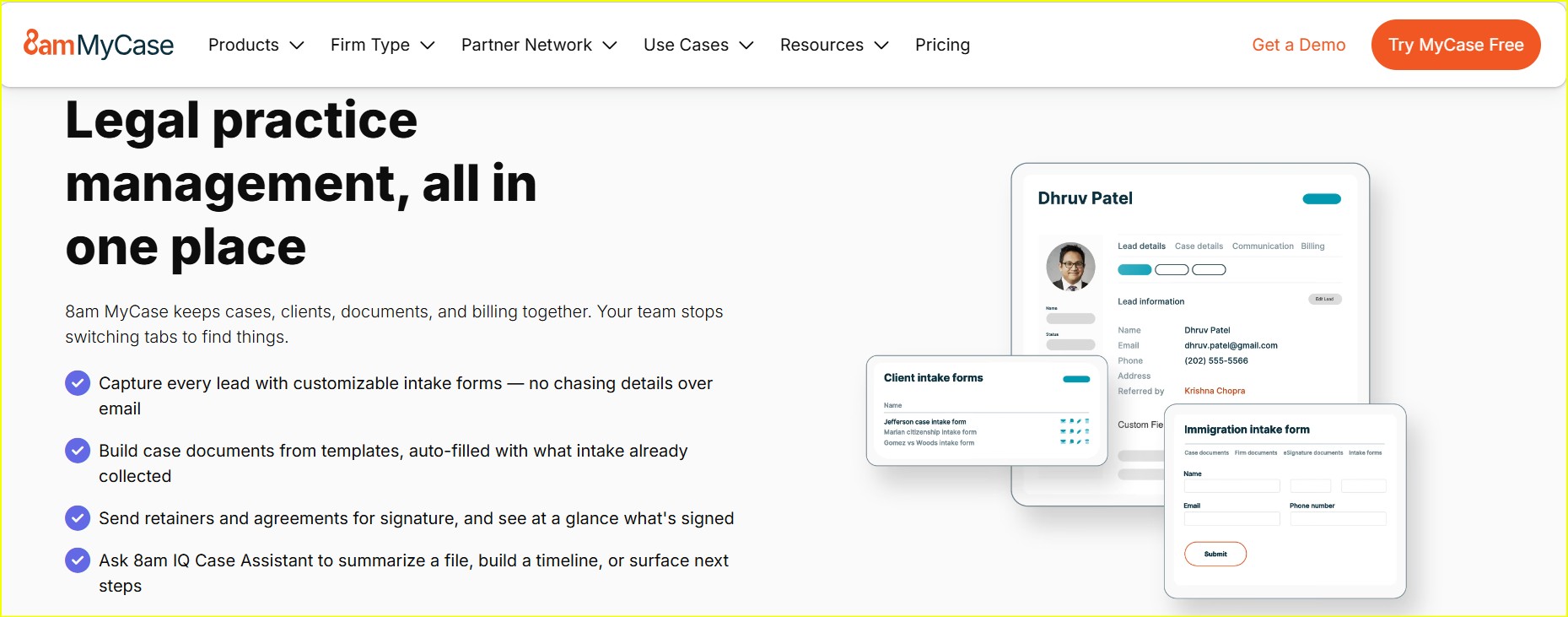
MyCase bundles lead management, customizable intake forms, e-signature, document generation, a client portal, and QuickBooks billing sync in one system. That suits solo and small firms, replacing two subscriptions with one.
MyCase is part of 8am. Lawmatics offers a one-way integration that creates a case in MyCase when a lead converts. Based on MyCase’s published features, first response still depends on your staff.
4. Smokeball Fits Document-Heavy Practices

Smokeball pairs matter management with document automation and what it calls an extensive library of automated legal forms. In the US, intake runs through its Intake add-on (included in the Prosper+ plan), and its Archie AI assistant is sold as an add-on. Firms that draft heavily are the natural fit. Evaluate the Intake module on its own terms, since intake is one module among many.
The important question for firms is not only what software provides, but whether it addresses the specific bottleneck affecting growth.
A firm struggling with missed inquiries may need to examine intake performance separately from internal matter management.
5. Lead Docket by Filevine Targets High-Volume Intake Teams
Lead Docket is Filevine's lead management tool, with customizable intake forms, automated texts and emails, and follow-up alerts. Its LeadsAI add-on, launched in October 2023, summarizes leads and predicts whether to sign, refer out, or reject. At launch, the prediction feature covered motor vehicle accident cases only. Confirm current coverage for your practice area.
If your current legal CRM lacks instant qualification features, review dedicated Lead Docket alternatives designed around intake speed.
6. PracticePanther Is a Billing-First Choice for Solo and Small Firms
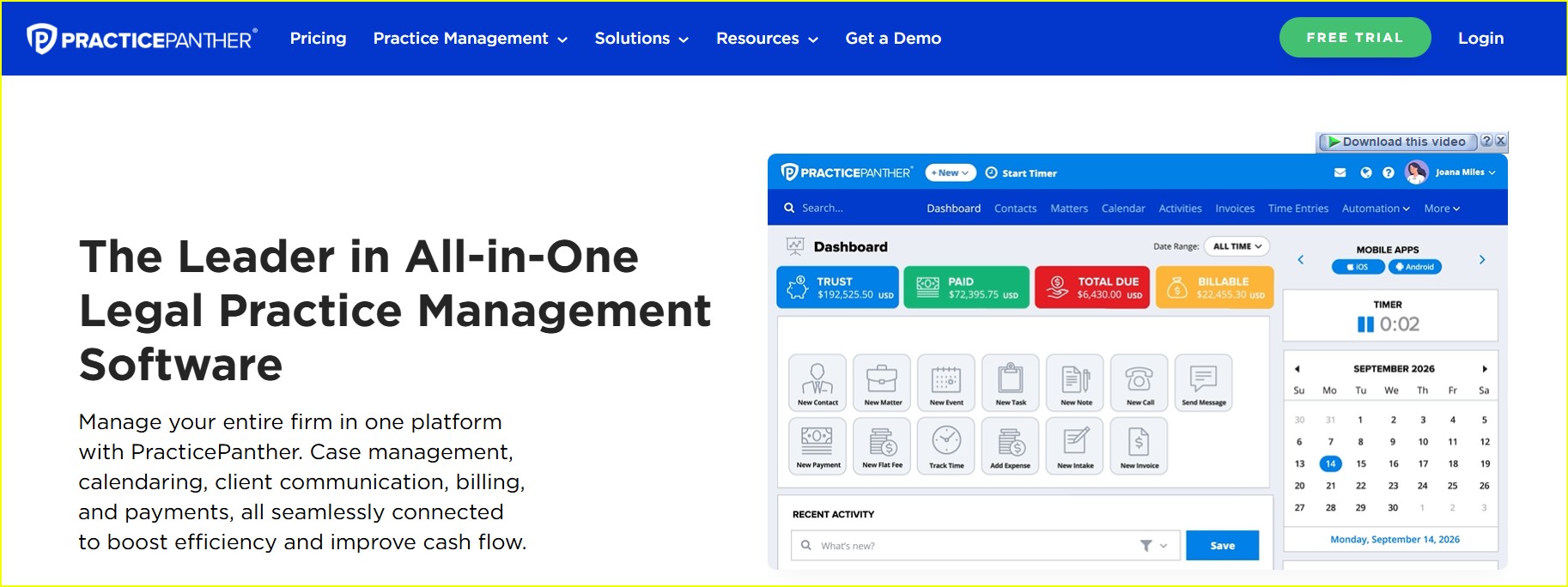
PracticePanther’s key features include online intake forms, flexible billing rates (hourly, flat-fee, and contingency), case management, and third-party integrations. Billing is the draw. PracticePanther is a practice management system first, so firms that want automated response and persistent follow-up should check what sits on top of the forms.
Questions to consider include:
Does the system match the firm's practice area needs?
Does it support the firm's communication process?
Does it connect properly with existing tools?
Does it improve consistency for staff?
Software selection should start with operational requirements rather than choosing features first.
7. CosmoLex Puts Trust Accounting and Billing First
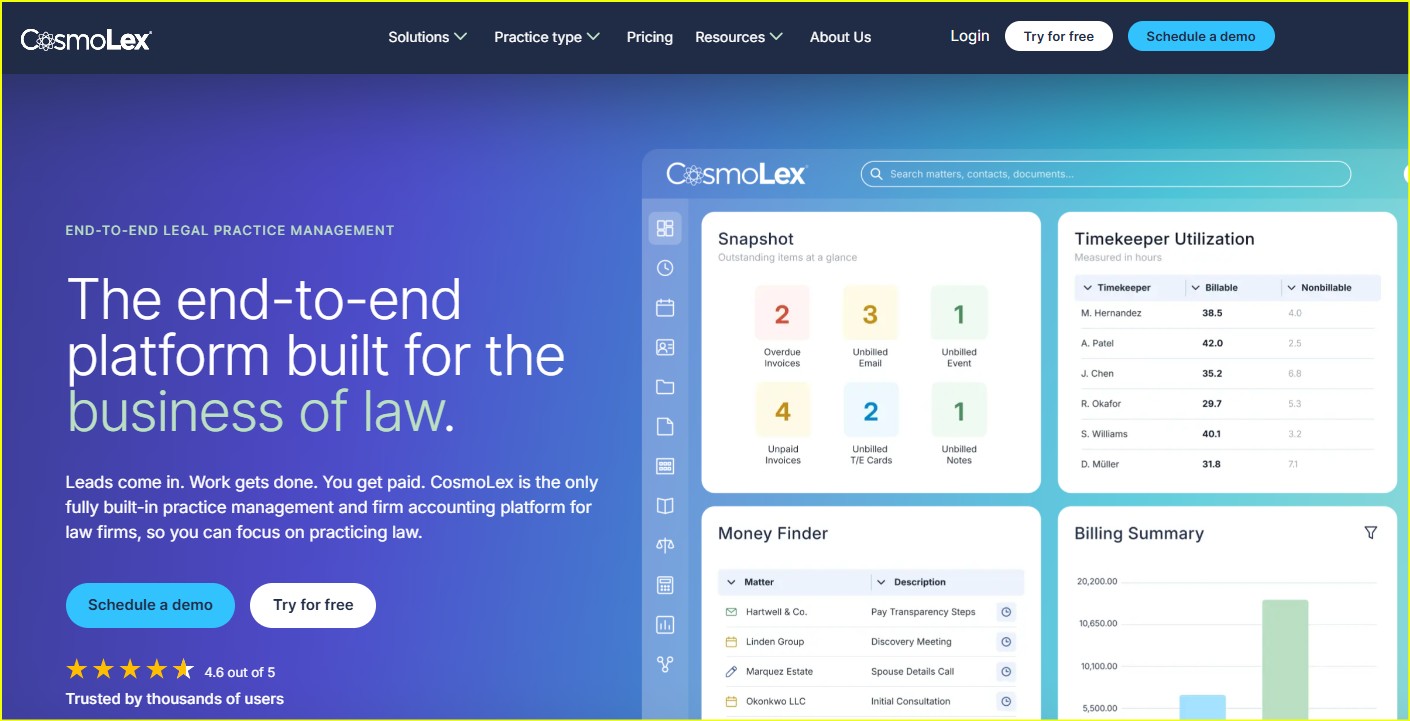
CosmoLex is a platform combining matter management, billing, accounting, and trust or IOLTA management, with a built-in general ledger. CosmoLex is built around accounting and practice management, so firms that need marketing automation or lead nurturing may still want a dedicated CRM. Firms that already run separate accounting software may find the built-in ledger redundant.
Match the Tool to the Gap Before You Switch
Clio Grow alternatives differ by the gap each one closes: billing, document automation, marketing automation, or live response. Match the tool to the gap, and confirm pricing and escalation terms in writing before you sign.
Firms paying for acquisition should also check what happens to inquiries already arriving, since more ad spend cannot repair a slow intake process. A Pipeline Audit™ examines your intake pipeline for leakage and conversion gaps before you add lead-generation spend. Book a Pipeline Audit™ with PipelineLift AI to start.
Frequently Asked Questions
What Is Clio Grow?
Clio Grow is Clio's client intake and legal CRM product. Firms use online intake forms and a matter pipeline to track prospective clients, and Grow pairs with Clio Manage for practice management.
Which Clio Grow Alternative Suits a Small Firm?
Solo and small firms usually weigh MyCase and PracticePanther for bundled billing and intake, and Lawmatics for marketing automation. Match the tool to your largest gap, then confirm pricing with the vendor. Judge cost per signed client rather than cost per lead, a distinction covered in PipelineLift AI's article on true cost per client versus cost per lead.
Does AI Intake Replace a CRM or Practice Management System?
No. PipelineLift AI works alongside your existing CRM or practice management software where integrations are supported. PipelineLift AI handles response, qualification, and follow-up, and you can review PipelineLift AI services to confirm fit with your workflow.
How Does PipelineLift AI Pricing Work?
The model is usage-based and prepaid, built on COI Credits, with automatic credit reload and no monthly subscription. A Case Opportunity Intake (COI) is a lead contacted, qualified, and moved to the next step. A refundable implementation fee of $1,997 applies, and the pricing page lists current terms.
Disclaimer
This article is for educational purposes only and does not constitute legal advice. Nothing in this article creates an attorney-client relationship.
Brian Heller is a member of PipelineLift AI's Founding Legal Advisory Council and is an equity holder in PipelineLift AI.


