
Can AI Qualify Legal Leads? What This Technology Does?
Can AI qualify legal leads without turning an intake system into a substitute for lawyers? Yes, within defined limits.
AI can support legal intake by collecting information, asking firm-approved questions, identifying whether an inquiry meets predefined criteria, maintaining follow-up, and routing the prospective client toward the appropriate next step. What it should not do is make legal judgments, provide legal advice, or independently decide whether a lawyer should accept a representation.
For growing firms, that distinction matters. Qualification is not simply deciding whether a lead is “good” or “bad.” It is an operational process for moving the right information to the right people at the right time.
What AI Lead Qualification Means For A Law Firm?
AI for lead qualification uses structured rules and conversational workflows to gather information from a prospective client and compare that information with criteria established by the firm.
A legal intake workflow might ask about the general type of legal issue, relevant location, important dates, parties involved, and the caller's preferred next step. The exact questions depend on the firm's requirements and should be configured deliberately rather than improvised by an AI system.
That makes qualification different from legal analysis.
AI may help determine that an inquiry matches a firm's predefined intake criteria. An attorney or authorized team member remains responsible for legal judgment, representation decisions, and matters requiring professional interpretation.
For a broader look at where qualification fits into the full intake process, PipelineLift AI's legal intake guide explains the stages between first inquiry and the next appropriate step.
How Does AI For Lead Qualification Work In Legal Intake?
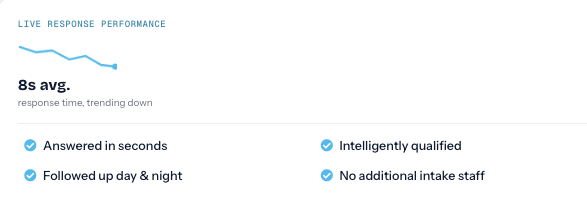
A well-designed AI intake process usually combines several operational functions rather than relying on a single lead score.
Information Collection
The system can ask consistent intake questions and organize the responses for the firm's team.
This matters because intake quality can vary when different employees ask different questions, workloads rise, or an inquiry arrives outside normal office hours. Structured questioning gives the firm a more consistent starting point.
Firm-Defined Qualification
AI can compare responses with rules supplied by the law firm. Those rules might address whether the inquiry appears to fall within a particular type of matter, geographic requirement, or other non-legal business criteria established by the firm.
The system should not invent qualification standards on its own.
Routing And Human Handoff
Qualification should lead somewhere.
Depending on the workflow, an inquiry may move to an intake specialist, a consultation step, additional information collection, or another firm-approved action. Matters that require human judgment should be escalated rather than forced through automation.
“The firms that get this right treat it as a contract and workflow decision, not just a technology choice — they define escalation triggers up front instead of discovering them the hard way, on a live call.”
Brian Heller, JD, Boston University; MBA, University of Michigan — 20+ years in corporate law and business development; led $1B+ in annual deal negotiations
AI Can Support Follow-Up After The First Contact
Qualifying leads is rarely limited to one conversation.
A prospective client may submit a form and then miss a call back. Another may answer an initial question but stop responding before scheduling a consultation. An after-hours inquiry may need immediate acknowledgment followed by additional communication the next morning.
AI-supported legal intake can help maintain that continuity through voice, SMS, email, and web chat when those channels are part of the firm's configured workflow.
This is where qualification connects directly to conversion. A firm can generate substantial inquiry volume while still losing opportunities when follow-up is inconsistent.
PipelineLift AI discusses this distinction in more detail in its article on why many firms should examine their conversion problem before assuming they need more lead generation.
AI Should Not Replace Legal Judgment
AI for legal professionals requires a clearer boundary than ordinary sales automation.
The American Bar Association's Formal Opinion 512, issued July 29, 2024, addresses lawyers' use of generative AI and identifies applicable professional obligations including competence, protection of client information, communication, and supervision. The opinion reinforces the need for lawyers to understand the capabilities and limitations of the technology they use.
Prospective-client information also deserves careful treatment. ABA Model Rule 1.18 addresses duties involving prospective clients and information learned during qualifying consultations. Specific professional-responsibility requirements can vary by jurisdiction and implementation, so firms should evaluate the rules and guidance applicable to their own practice.
In practical terms, an AI intake workflow should have defined boundaries. It can gather facts, follow scripts, support administrative qualification, and route inquiries. Lawyers and authorized staff should remain responsible for legal advice, professional judgment, conflict decisions, and representation decisions.
AI Intake Can Complement A Law Firm Intake Specialist
Using AI does not require removing people from legal intake.
A law firm intake specialist may be most valuable when a situation requires empathy, judgment, clarification, escalation, or a more complex conversation. AI can support the repetitive and time-sensitive portions of the workflow so those people receive better-organized information and can focus their attention where human involvement adds the most value.
The practical division of work might include AI handling initial response and routine follow-up while the firm's team handles sensitive conversations and judgment-dependent decisions.
The goal is not automation for its own sake. It is a more consistent legal intake process.
Qualification Is Only Useful When The Workflow Continues
One common mistake is treating qualification as the finish line.
A lead can meet every intake criterion and still go nowhere if the firm does not follow up, schedule the next step, or make an effective handoff. Legal intake therefore needs to connect qualification with response, communication, and routing.
PipelineLift AI defines Case Opportunity Intake (COI) as a lead contacted, qualified, and moved to the next step.
That final requirement matters. Qualification creates value when it helps the firm move an appropriate inquiry forward, not when it simply adds another status label to a database.
Where PipelineLift AI Fits Into Legal Lead Qualification?
PipelineLift AI is intake and conversion infrastructure built specifically for law firms.
Its platform can support initial engagement through AI voice agents, SMS, email, and web chat, along with intelligent qualification, persistent follow-up, missed-call recovery, and workflow integrations. Human team members can remain involved wherever the firm's process requires judgment or intervention.
Rather than treating qualification as an isolated AI feature, PipelineLift AI connects it with the larger intake workflow. The objective is to help firms respond, qualify, follow up, and move appropriate opportunities to the next step more consistently.
Firms evaluating how this process fits together can review how PipelineLift AI works.
Conclusion
AI can qualify legal leads when qualification is defined as structured information gathering, application of firm-approved criteria, follow-up, and movement toward the next appropriate step.
The stronger question for managing partners is not simply whether AI can screen inquiries. It is whether the firm's entire legal intake process reliably turns incoming demand into qualified opportunities that reach the people who need to act on them.
For firms already investing in marketing, improving that process may be more valuable than automatically increasing lead-generation spend.
If your firm is generating inquiries but does not have clear visibility into what happens between first contact and the next step, schedule a Pipeline Audit™ with PipelineLift AI to examine potential gaps in response, qualification, follow-up, and intake workflow.
Frequently Asked Questions
Can AI Qualify Legal Leads Automatically
AI can perform defined administrative qualification tasks using criteria established by the law firm. Matters requiring legal judgment, professional interpretation, or representation decisions should remain with appropriately authorized people.
What Information Can AI Collect During Legal Intake
The appropriate information depends on the firm's workflow and applicable requirements. AI can be configured to ask firm-approved intake questions, capture responses, and organize information for the next step.
Can An AI Voice Agent Qualify Law Firm Leads
An AI voice agent can support initial intake by asking predefined questions, capturing information, and routing inquiries according to configured criteria. Firms should also establish clear escalation paths for conversations requiring human attention.
Does AI Intake Replace A Law Firm Intake Specialist
It does not have to. AI can complement an existing intake team by handling defined tasks such as first response, routine information gathering, missed-call recovery, and follow-up while people remain responsible for judgment-intensive interactions.
Can AI Provide Legal Advice During Qualification
PipelineLift AI should not be used to provide legal advice or make legal judgments on behalf of attorneys. Its role is to support the operational intake process and route matters appropriately.
How Should A Firm Evaluate AI Lead Qualification
Start with the workflow rather than the technology. Identify what information needs to be collected, which qualification criteria can be defined in advance, when a person must take over, how follow-up occurs, and what happens after a lead qualifies.
Disclaimer
This article is for educational purposes only and does not constitute legal advice. Nothing in this article creates an attorney-client relationship.
Brian Heller is a member of PipelineLift AI's Founding Legal Advisory Council and is an equity holder in PipelineLift AI.


